The Complete Guide to Outsourcing Wedding Video Editing in 2026
Everything videographers need to know about outsourcing post-production: when it makes sense, what to look for, pricing, and how to make the transition without losing your creative identity.
You booked 35 weddings this season. You filmed every single one beautifully. And now you're staring at a hard drive full of terabytes, a growing backlog, and couples who've been waiting weeks — sometimes months — for their films.
Sound familiar?
If you're a wedding videographer in 2026, you already know the math doesn't work. A single wedding can generate 5 to 6 hours of raw footage across multiple cameras. Editing a highlight film, a full-length documentary, ceremony coverage, and social media teasers from that footage can easily consume 30 to 50 hours of post-production work. Multiply that by your booking calendar, and you've got a full-time editing job on top of your full-time filming job.
That's why outsourcing wedding video editing has gone from a "nice-to-have" to a genuine business strategy for videographers who want to grow — without burning out.
This guide covers everything you need to know about outsourcing your post-production in 2026: when it makes sense, what to look for in an editing partner, how much it costs, and how to make the transition without losing your creative identity.
Why Videographers Are Outsourcing More Than Ever
The wedding industry is experiencing a period of sustained demand. Over 2 million weddings take place annually in the United States alone, and couples are expecting more deliverables than ever before. A typical premium video package in 2026 might include a cinematic highlight reel, a full-length documentary edit, ceremony and speech videos, social media teasers for Instagram Reels and TikTok, and sometimes even same-day edits.
That's a lot of content from a single event.
Meanwhile, the business side of wedding videography has gotten more demanding too. Clients expect faster turnaround times. Social media has created pressure for quick teaser deliveries within days of the wedding. And couples are comparing your work to the cinematic, editorially polished content they see flooding their feeds.
The result? Post-production has become the bottleneck. Filming capacity scales much faster than editing capacity. You can hire a second shooter relatively easily, but finding the time (or the energy) to sit at your desk for another 40-hour editing marathon is a different story entirely.
If you spend any time in online videographer communities, you'll see the same story repeated over and over: videographers editing every waking moment — skipping workouts, missing time with their spouse and kids, canceling plans — and still watching the backlog grow faster than they can clear it. One videographer described reaching a point where they were ready to quit weddings entirely because they simply didn't have the mental bandwidth left for editing. Another admitted to working 17-hour days during peak season, editing without breaks, seven days a week.
This isn't a niche problem. It's an industry-wide pattern.
Outsourcing solves this by separating two very different skill sets — the creative vision of capturing a wedding day, and the technical execution of assembling, grading, and polishing the final films.
The Real Cost of Editing Everything Yourself
Before we talk about the cost of outsourcing, let's talk about the cost of not outsourcing.
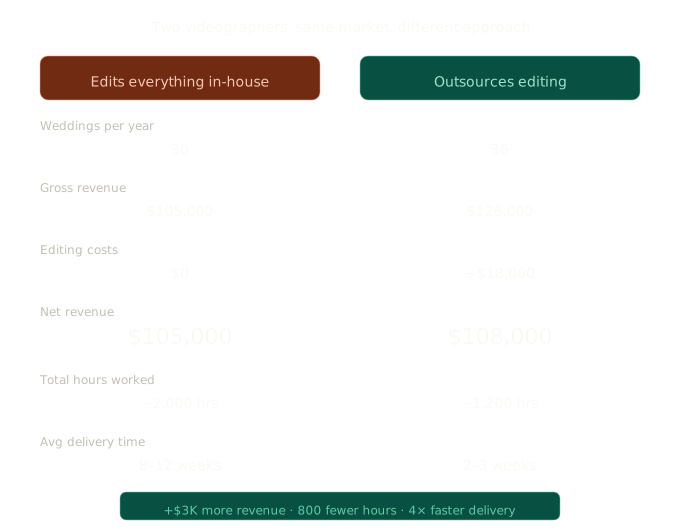
Time cost. If you're spending 30 to 50 hours editing each wedding and you've booked 30 weddings this year, that's 900 to 1,500 hours of editing alone. That's roughly 6 to 9 months of full-time work — just on post-production.
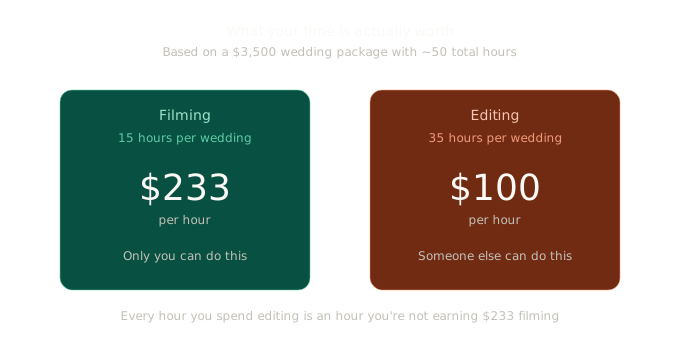
Opportunity cost. Every hour you spend editing is an hour you're not spending on marketing, client relationships, second-shooting, attending bridal shows, or simply living your life. If you could take on five more weddings at $3,000 each by freeing up editing time, that's $15,000 in revenue you're leaving on the table.
Quality cost. When you're exhausted and behind schedule, your edits suffer. Rushed color grading, generic music choices, sloppy pacing — these are symptoms of a videographer who's stretched too thin, not one who lacks skill. Your best creative work happens when you have the bandwidth to be intentional, not when you're powering through a backlog at 2 a.m.
Personal cost. Burnout is real in this industry. Missing family dinners, skipping vacations, working through weekends — it takes a toll. Many videographers who've been in the industry for five or more years report that editing fatigue is the number one reason they consider leaving the profession. In online communities, you'll find videographers describing the moment they realized something had to change: one was editing every waking moment and still falling further behind each week. Another described the editing cave as "miserable" — they love shooting, love the couples, but dread the weeks of post-production that follow every wedding weekend.
The question isn't whether you can do it all yourself. You probably can. The question is whether you should.
What Can You Actually Outsource?
The short answer: almost everything in post-production.
Here's a breakdown of what most professional editing services handle:
Highlight Films. These are the flagship deliverable for most wedding videographers — a 4 to 8 minute cinematic video set to music, showcasing the emotional arc of the day. A good editing partner will match your pacing, tone, and storytelling style.
Full-Length / Documentary Edits. A 30 to 60 minute chronological film covering the full wedding day from preparation through reception. These require careful multi-camera synchronization, audio mixing from multiple sources, and a keen eye for maintaining energy across a long runtime.
Ceremony and Speech Edits. Standalone videos of the ceremony or reception speeches, typically delivered as clean multi-cam edits with professional audio. These are often add-on deliverables for your clients.
Social Media Teasers. Short vertical videos optimized for Instagram Reels, TikTok, and YouTube Shorts. This is one of the fastest-growing deliverables in 2026, as couples want shareable content within days of their wedding.
Color Grading and Audio Mixing. Some videographers prefer to assemble rough cuts themselves but outsource the technical finishing work — color correction, grading, sound design, and audio leveling.
Footage Culling and Organization. Before any editing begins, someone needs to review hours of raw footage, select the best takes, sync multi-camera angles, and organize everything into a workable project. This is often the most tedious part of post-production and a natural starting point for outsourcing.
How Much Does Outsourcing Cost in 2026?
Pricing varies widely depending on the service, complexity, and turnaround time. Here's a general overview of what the market looks like:
DeliverableTypical Price RangeHighlight Film (4–6 min)$200 – $600Full Film / Documentary (30+ min)$300 – $800Ceremony Edit (up to 30 min)$75 – $200Speech Edit (up to 30 min)$75 – $200Social Media Teaser$50 – $150
Some services also offer monthly subscription plans for high-volume videographers, typically ranging from $500 to $1,500 per month depending on the number and complexity of deliverables.
How to think about ROI: If outsourcing a wedding's post-production costs you $400 to $700, and that frees you up to book even one additional wedding per month at $3,000 to $5,000, the return on investment is substantial. You're not spending money — you're investing it.
At Wedwill, for example, our fixed-price services start at $100 for ceremony or speech edits and $400 for highlight films and full-length documentaries. New customers can try our service with a $199 trial highlight edit that includes a 7-day money-back guarantee — so you can test the quality before committing.
What to Look for in an Editing Partner
Not all editing services are created equal. Here are the key factors to evaluate:
1. Style Matching Ability
This is the most important factor — and the one that causes the most anxiety. Your editing style is your brand. Couples hired you because they love your look — the pacing, the color palette, the way you handle emotion. If your editing partner can't replicate that, your clients will notice.
Videographers who've been burned by outsourcing tend to share the same frustration: the editor promised to match their style but delivered something generic. The edit wasn't cut to the beat of the music, the best moments of the day were buried, and everything felt rushed — like the editor was just trying to get it done rather than get it right. Some videographers report spending more time fixing an outsourced edit than it would have taken to do it from scratch.
This is why the style-matching process matters more than price. Look for services that invest time upfront: reviewing your previous work, studying your pacing and color preferences, and iterating on the first few projects until they nail your aesthetic. The best partners will become so familiar with your style that your clients won't know the difference.
Courtney, a wedding videographer with 8+ years of experience and 20 to 30 weddings per year, described this exact fear before trying Wedwill: "I was pretty nervous, because I have a very set way that I do my editing." But after noting her style preferences and receiving her first edit back in about a week, she was surprised at how well the team followed her creative direction. She's since sent multiple projects and describes the experience as both a stress reducer and, unexpectedly, a source of creative inspiration — seeing fresh ideas in the edits that she wouldn't have thought of herself. (Read her full story →)
Client Success Story
"WedWill Gave Me My Life Back"
Real stories from wedding videographers who transformed their business with WedWill
Courtney Captures
Wedding Videographer · 8+ years · 20–30 weddings/year
"I was at a breaking point. Editing was stacking up and keeping me from the things I love — time with family, gardening, and personal hobbies."
With 2025 being her busiest season yet, Courtney was terrified of rushing through projects and delivering subpar work. She decided to try outsourcing for the first time — and chose WedWill.
1-Week Turnaround
"Way quicker than I would have done it myself"
Perfect Style Match
"They did a super good job following my specific editing preferences"
Easy Revision Process
"Add comments right on the video at the exact time you want changes"
Business Growth
"Now I can take Saturday-Sunday doubleheaders knowing I have backup"
The Bottom Line
"Not only has WedWill been a huge stress reducer, but I can now focus on marketing my business and social media presence. I'm really happy I tried WedWill, even though I was nervous. It definitely has paid off."
Industry standard turnaround for outsourced edits ranges from one to four weeks. Some services offer rush options for an additional fee. In 2026, with couples expecting faster delivery than ever, turnaround time is a genuine competitive advantage.
Ask about average delivery times and whether they can handle peak season volume without slipping on deadlines.
3. Revision Process
Revisions are a natural part of the editing workflow. Make sure your partner includes a reasonable number of revisions in their pricing (two to three is standard) and has a clear process for feedback — ideally through a platform like Frame.io that supports timestamped comments.
4. Software Compatibility
Most wedding videographers work in Adobe Premiere Pro, Final Cut Pro, or DaVinci Resolve. Confirm that your editing partner works in your preferred software and — critically — delivers project files along with the final export. This gives you the ability to make last-minute tweaks yourself if needed.
Getting the project file is a bigger deal than many videographers realize. Some services charge extra for this, while others include it standard. It's worth prioritizing partners who hand over the full project file at no additional cost.
5. Communication and Workflow
Clear communication is the foundation of a good outsourcing relationship. Look for partners who use a dedicated portal or project management system rather than relying on scattered email threads. You should be able to upload footage, track project status, review drafts, and request revisions in one place.
6. Music Licensing
Music is a critical component of wedding films. Some editing services include royalty-free music from licensed libraries like Musicbed or Artlist. Others expect you to provide your own tracks. Clarify this upfront — licensing issues can create headaches down the road.
7. Data Security
You're sharing large volumes of sensitive footage with a third party. Ask about their data retention policies, how footage is stored and transferred, and when files are deleted after project completion.
Fixed-Price vs. Subscription: Which Model Works for You?
Most editing services offer one or both of these pricing models:
Fixed-Price (Pay Per Project) works best if you have variable volume — maybe 15 to 25 weddings per year — and want the flexibility to outsource only when you need it. There's no ongoing commitment, and you know exactly what each project will cost.
Subscription (Monthly Plan) makes sense if you're shooting consistently — 30 or more weddings per year — and want to make editing a predictable monthly expense. Subscriptions typically come with faster turnaround times, a dedicated editor who learns your style, and unlimited revisions.
Many videographers start with fixed-price projects to test a service's quality, then transition to a subscription once they've built trust.
Brianna Hall of Iris Marie Photography is a great example. After welcoming her first baby, her editing time dropped to zero — but she still had 1 to 3 video bookings per month alongside her photography work. She started with Wedwill's $199 trial, then moved to custom project-based pricing with no forced subscription. Over just two months, Wedwill delivered 4 wedding highlights, 5 social media teasers, and mixed-media content — allowing her to maintain her business through maternity leave without compromising on quality. (Read Brianna's full story →)
How to Prepare Your Footage for Outsourcing
A smooth handoff starts with good organization. Here are some practical tips:
Create a folder structure. Organize footage by event segment: prep, ceremony, reception, details, drone, audio. This saves your editor hours of sorting and ensures nothing gets missed.
Include audio files separately. If you recorded audio with external recorders (lav mics, shotgun mics, board feeds), label them clearly and include them alongside the video footage.
Provide a shot list or timeline. A brief note outlining the key moments — "first look at 2:15 PM, ceremony at 4:00 PM, first dance at 8:30 PM" — helps your editor navigate the footage efficiently.
Share reference material. If you have a specific style, share two or three of your favorite previous edits so your editor can study your pacing, color preferences, and storytelling approach.
Specify music preferences. Either provide the tracks you want used or give your editor guidance on the mood and genre you're looking for.
Upload to a reliable platform. Google Drive and Dropbox are the most commonly used options. Make sure your upload is complete and accessible before submitting the project.
Overcoming the Fear of Losing Creative Control
This is the biggest hesitation we hear from videographers considering outsourcing for the first time. And honestly? It's completely valid.
When you film a wedding, you're not just operating a camera. You're reading the room, sensing the energy, building relationships with the couple, and mentally assembling the story as the day unfolds. Many videographers describe already editing the film in their head while they're shooting — noting which moments will pair with certain music, which reaction shots will land hardest, which quiet details will anchor the story.
Handing all of that context to someone who wasn't there feels like a leap of faith. As one videographer put it: "I'd love to outsource my editing. It makes me miserable. But I can't imagine someone else producing what's in my head without me holding their hand the entire time — which defeats the purpose."
We hear this a lot. And we think it reveals something important: the fear isn't really about editing quality. It's about losing the emotional connection between the person who experienced the day and the person who tells the story.
Here's the thing, though — that connection can be transferred. It just takes the right process.
Start small. Don't outsource your entire season on the first try. Send one project — ideally a straightforward wedding with clean footage — and evaluate the result. Some videographers start by outsourcing only the deliverables that feel less personal: ceremony multi-cams, speech edits, or footage culling. Keep the highlight film for yourself until you're confident in the partnership.
Provide detailed feedback. The first edit from a new partner will rarely be perfect. That's normal. What matters is how they respond to your notes. A partner who listens, adapts, and improves quickly is worth keeping. One videographer shared that after keeping an editor for a full year on non-portfolio weddings, the edits still felt generic — that's a sign to move on. But many others describe a calibration period of just two to three projects before their editor was producing work they were proud to deliver.
Keep the project file. If your editing partner provides the project file (and they should), you always have the ability to open it up and make final adjustments yourself. Think of the outsourced edit as a high-quality first draft that you polish and approve. This single feature eliminates most of the "what if it's not right" anxiety.
Review before delivery. You should always review the final edit before it goes to your client. This ensures nothing leaves your desk that doesn't meet your standard — and it means your creative eye is still the last one on every film.
Over time, a good editing partner becomes an extension of your team. Many videographers report that after the initial calibration period, their editing partner is producing work that matches — or sometimes exceeds — what they would have done themselves.
The Outsourcing Debate: What Videographers Actually Say
If you've spent any time in videography forums and communities, you know this topic sparks strong opinions on both sides. Here's an honest look at what working videographers are saying:
The case against (and why people hesitate): Many videographers feel that editing is where the real storytelling happens, and that nobody can replicate the connection they built with the couple on the day. Others have tried outsourcing and been burned — receiving edits that felt rushed, weren't cut to the beat, or missed the best moments entirely. Some found that the time spent briefing the editor, transferring footage, and requesting revisions wiped out any time savings. These are legitimate concerns, and they're exactly why choosing the right partner matters so much.
The case for (and why people eventually try it): On the other side, videographers who've found the right editing partner describe it as transformative. They talk about getting their weekends back, booking more weddings without the dread of a growing backlog, and delivering films faster — which leads to better reviews and more referrals. Several describe it as the single best business decision they've made. One videographer shared that outsourcing turned 30 hours a week of editing into 20 hours invested in growing their business and 10 hours spent with family.
The middle ground: Many successful videographers take a hybrid approach. They outsource the time-intensive but less creative work — ceremony multi-cams, speech edits, footage culling, social media teasers — while keeping the flagship highlight films for themselves. This lets them protect the work that matters most to their brand while reclaiming significant hours from the deliverables that don't require their personal touch.
2026 Trends Shaping the Outsourcing Landscape
Several industry developments are making outsourcing more relevant than ever:
Social media deliverables are now standard. Couples in 2026 don't just want a highlight film. They want vertical teasers for TikTok and Reels, delivered within days. Outsourcing these quick-turnaround edits keeps your social content flowing while you focus on the flagship films.
AI-assisted editing tools are emerging. Tools for automated rough cuts, scene detection, and color matching are becoming more sophisticated. Professional editing services are integrating these tools to speed up workflows while maintaining human creative oversight — giving you faster turnaround without sacrificing quality.
Multi-day wedding events are increasing. Rehearsal dinners, welcome parties, and post-wedding brunches mean more footage and more deliverables per client. Outsourcing is the most practical way to handle expanded event coverage without expanding your working hours.
Cinematic expectations continue to rise. Influenced by short-form content platforms and streaming aesthetics, couples expect their wedding films to look and feel like professional cinema. Meeting these expectations consistently requires dedicated editing attention that's hard to sustain when you're also filming every weekend.
A Step-by-Step Plan for Your First Outsourced Project
Ready to try it? Here's a practical roadmap:
Step 1: Choose a service. Research editing companies, review portfolios, and compare pricing. Look for services that offer a trial or money-back guarantee so you can test with minimal risk.
Step 2: Prepare your footage. Organize files, include audio, and write a brief creative direction note.
Step 3: Submit and communicate. Upload your footage through the service's portal and share any reference videos, music preferences, or specific instructions.
Step 4: Review the first draft. Watch it through once without pausing, then again with notes. Focus on pacing, music fit, color tone, and storytelling flow.
Step 5: Request revisions. Send specific, timestamped feedback. "The intro feels slow — can you tighten the first 30 seconds?" is more helpful than "It doesn't feel right."
Step 6: Approve and deliver. Once you're happy, download the final video and project file. Review one last time, then deliver to your client.
Step 7: Evaluate. Did the quality meet your expectations? Was the turnaround acceptable? Was communication smooth? Use this assessment to decide whether to continue.
The Bottom Line
Outsourcing your wedding video editing isn't about giving up control. It's about building a sustainable business that lets you do what you're best at — filming incredible weddings and building relationships with your clients — while trusting skilled professionals to handle the post-production workload.
The videographers who thrive in 2026 won't be the ones who do everything themselves. They'll be the ones who build systems, delegate strategically, and protect their time and creative energy.
Whether you start with a single ceremony edit or hand over your entire season, the first step is always the hardest. But once you experience the relief of opening your email to a beautifully finished edit — one that matches your style and arrived on time — you'll wonder why you didn't start sooner.
Ready to Try Outsourcing?
At Wedwill, we make it easy to get started. Our fixed-price services start at just $100, and new customers can try a full highlight edit for $199 with a 7-day money-back guarantee. Every project includes color grading, sound mixing, royalty-free music from Musicbed, and your Adobe Premiere Pro project file — at no extra cost.
Wedwill is a professional wedding video editing service built for videographers. We've completed 800+ projects for 100+ videographers worldwide. Learn more about us →
Weekly newsletter
No spam. Just the latest releases and tips, interesting articles, and exclusive interviews in your inbox every week.
Thank you! Your submission has been received!
Oops! Something went wrong while submitting the form.